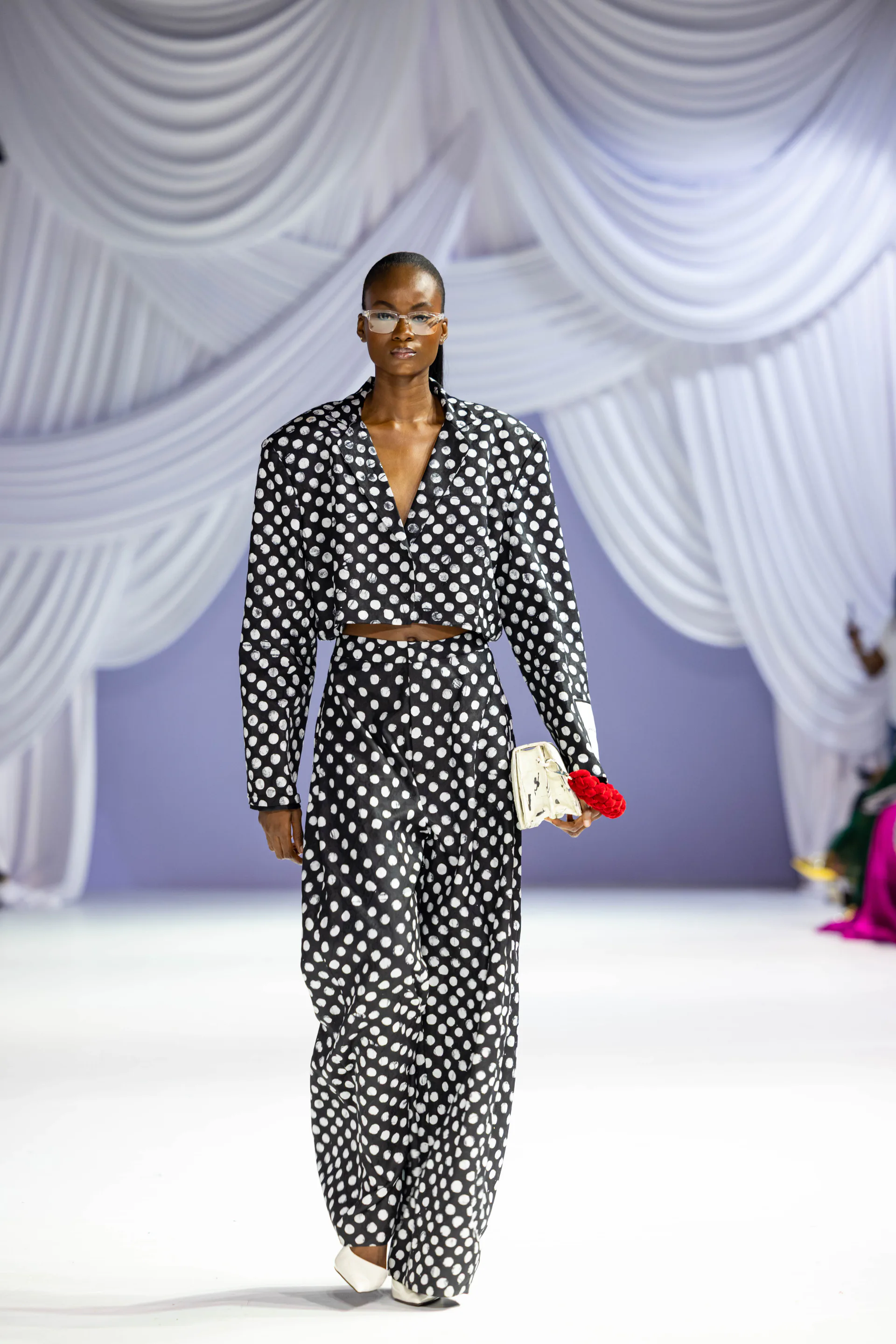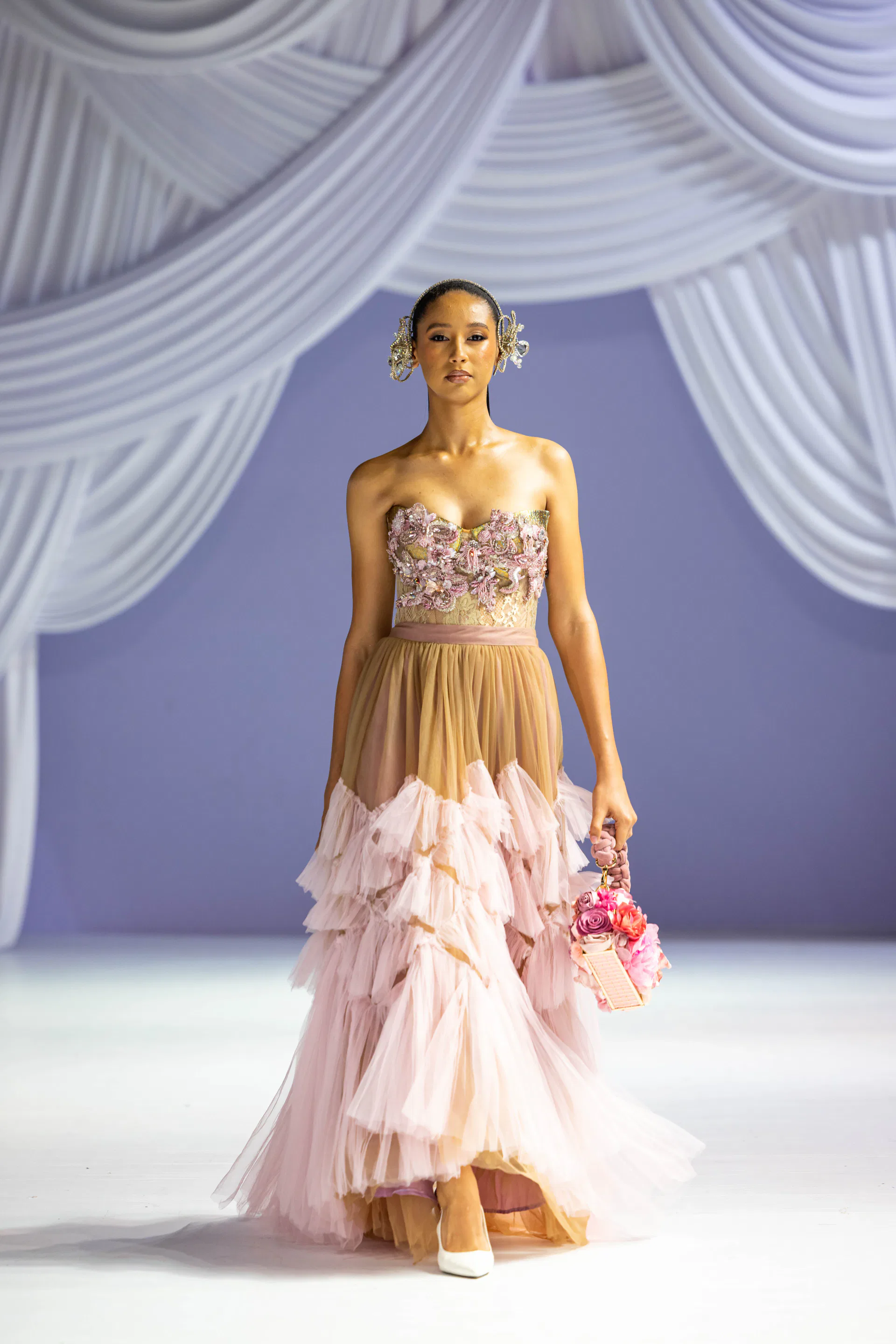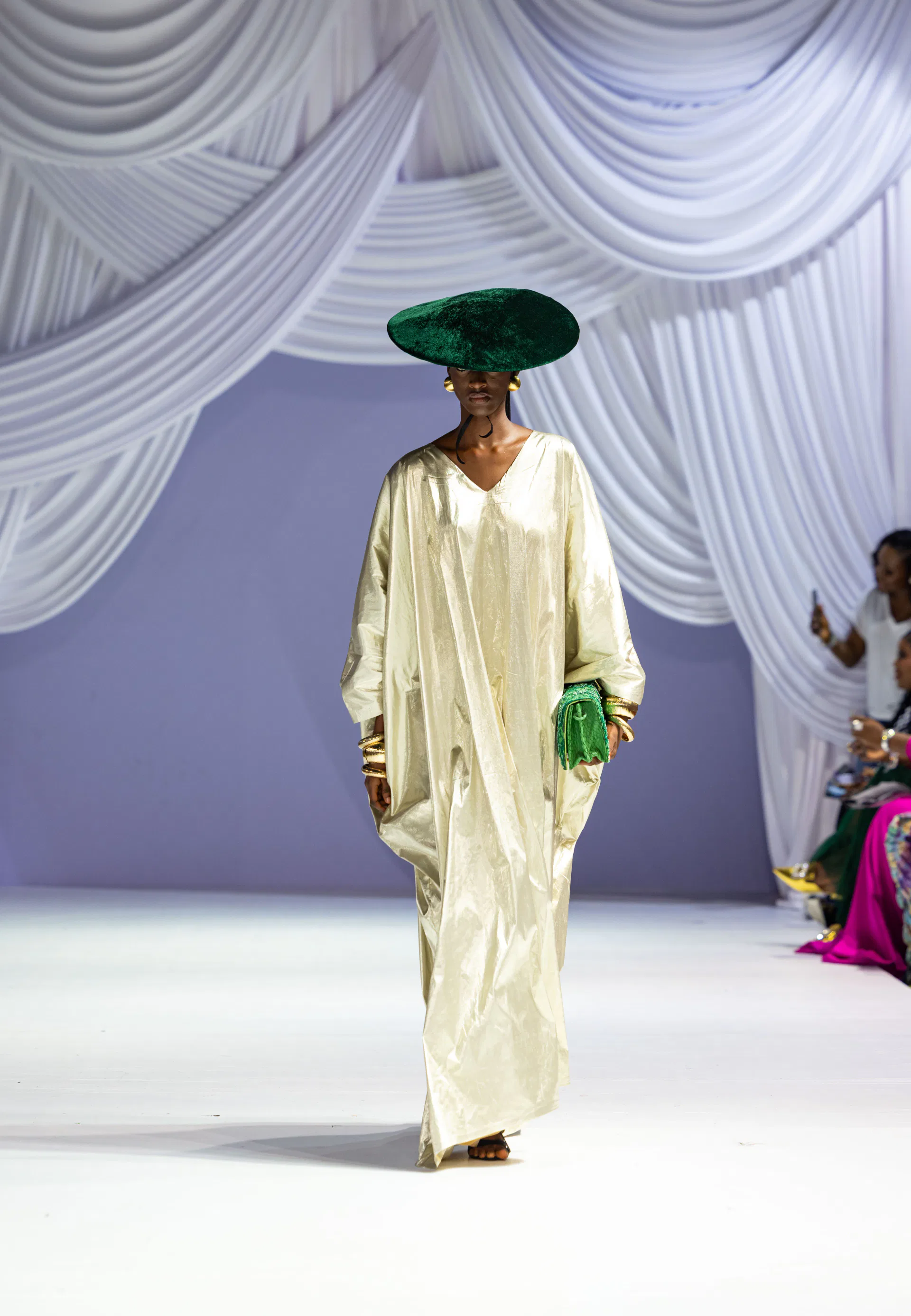
A memorable silhouette is an agreement between fabric, proportion and the space around the body.
01
Drawing with space
Architecture begins with the relationship between structure and space. Clothing does too. A wide sleeve changes the air around an arm; a sculpted skirt alters the pace of a walk; a precise shoulder redraws the line between the body and the room.
The strongest volumes are rarely large everywhere. They depend on contrast—a fitted waist beneath an open sleeve, a clean neckline above a textured surface, or a long uninterrupted line beside a concentrated detail.
02
What the fabric wants
Every material has a preferred behaviour. Velvet absorbs light and supports depth. Tulle holds air. Lace creates edges without fully closing them. Metallic fabric can appear firm in one angle and liquid in another.
Design begins by listening to those behaviours, then deciding when to work with them and when to create resistance. Construction gives the idea discipline, ensuring that drama never becomes weight without purpose.
03
Movement completes the form
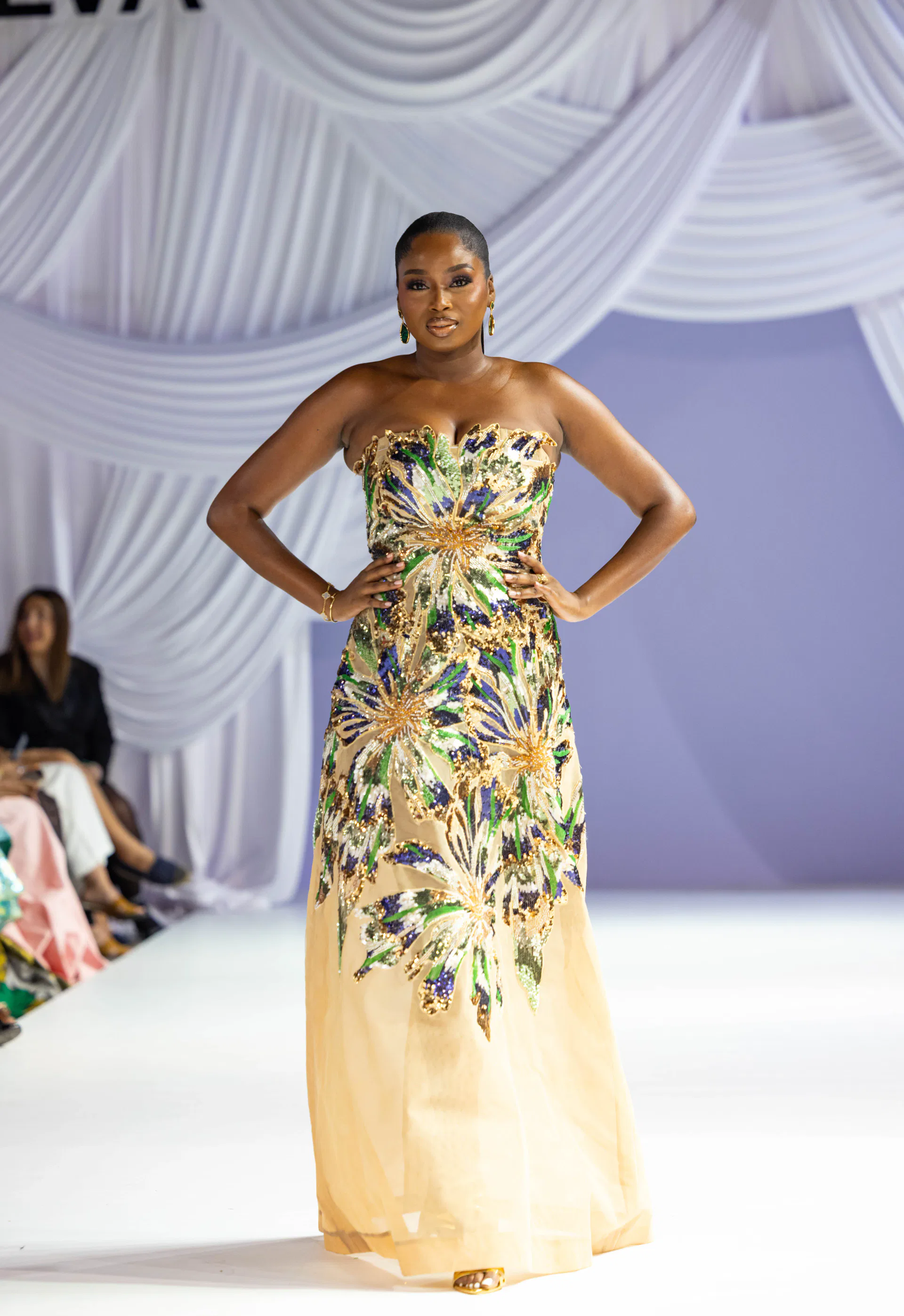
A fitting tests more than size. It reveals whether a garment can turn, sit, breathe and recover its shape. What appears perfect in a still image may need another solution once the wearer begins to move.
That is why the runway matters to the atelier. It shows architecture becoming choreography—the fixed decisions of cut and finish transformed by a living body.