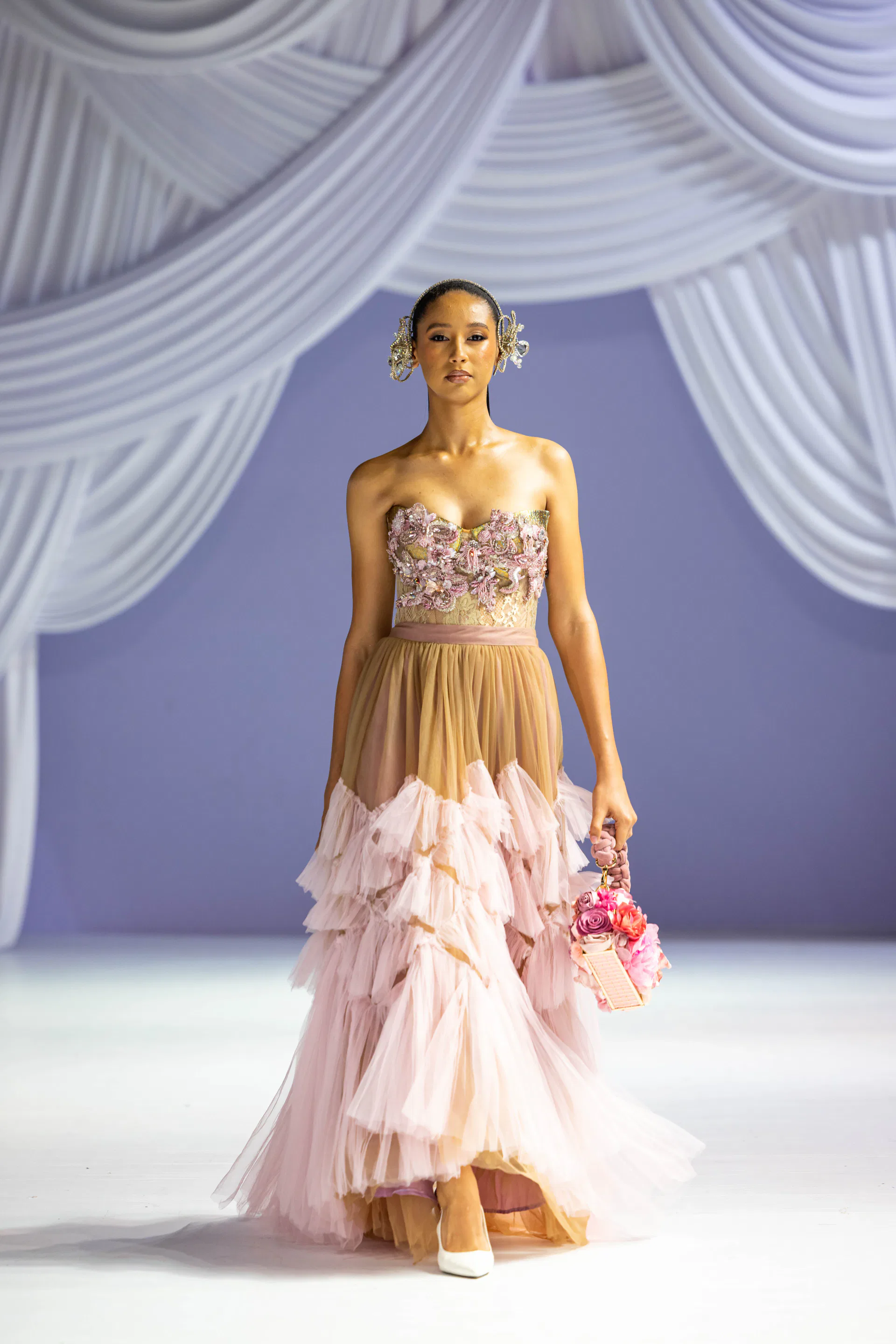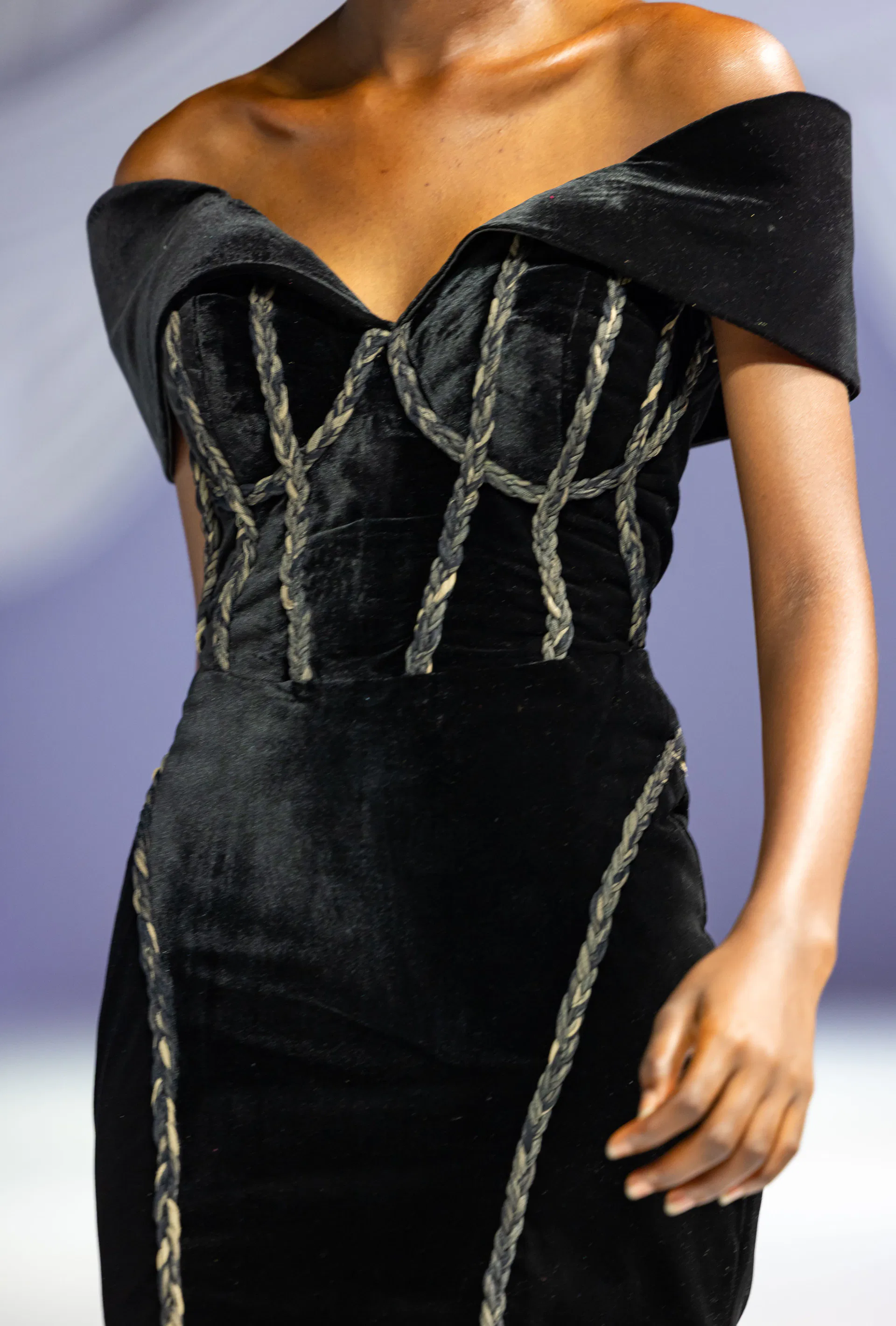
A repeated mark can behave like music: steady from a distance, full of variation when you move closer.
01
Repetition and interruption
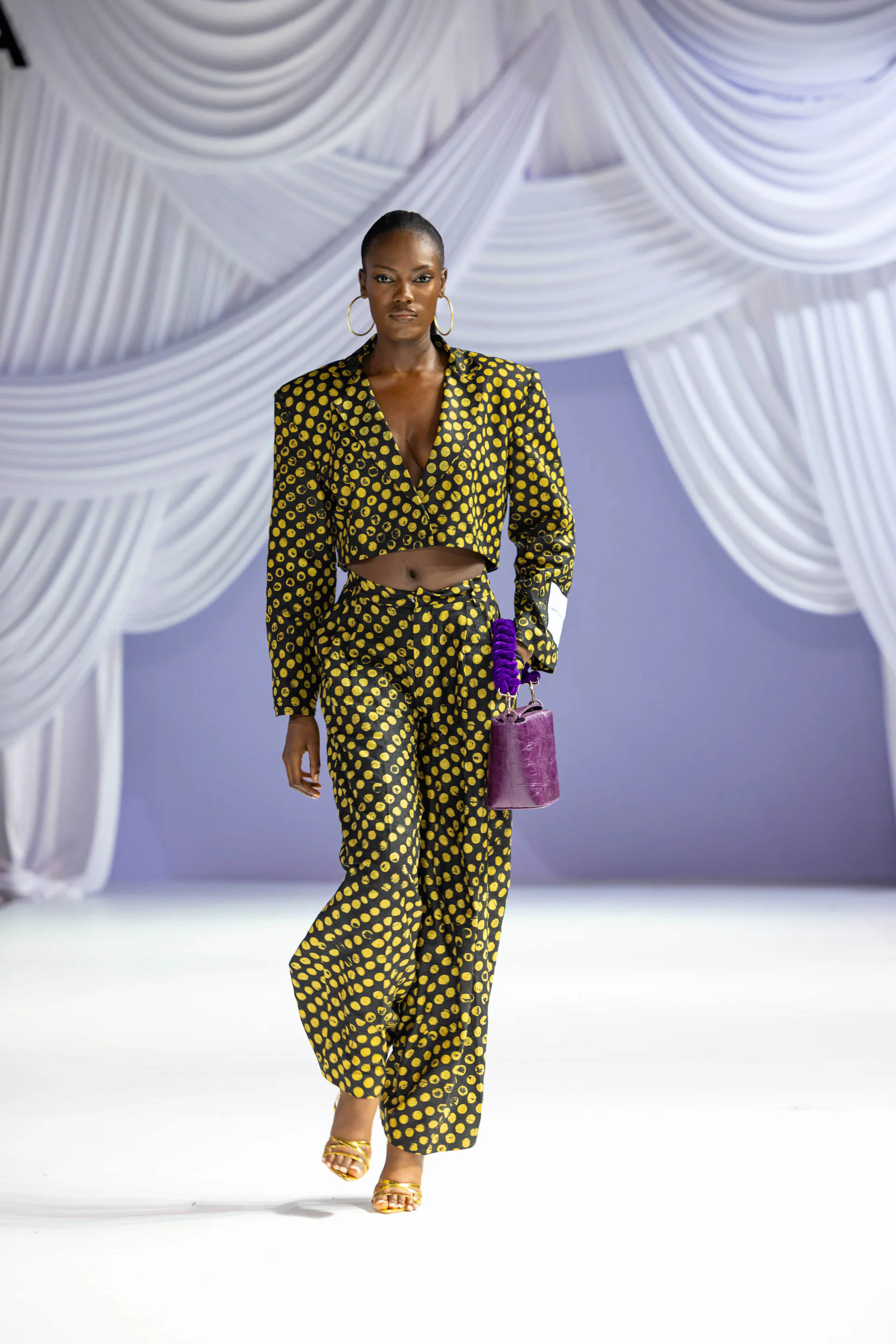
Dots carry an immediate graphic clarity. Repeated across tailoring, they establish rhythm; interrupted at a seam or pocket, they reveal construction. The eye moves between pattern and cut, reading both at once.
This tension is central to expressive tailoring. A disciplined jacket or trouser creates the frame, while pattern refuses excessive seriousness. The result feels direct, modern and alive.
02
An African print conversation
Da Silva’s designs have long been noted for their engagement with African textile patterns. Her 2017 work with Vlisco placed that conversation within the context of a textile house recognised for bold colour and print.
The most interesting use of pattern is not simply recognisable. It is transformed by scale, placement and the company it keeps. Beside velvet it becomes richer; against white it becomes sharper; across a fluid silhouette it begins to move.
03
Confidence in multiples
A single mark can feel delicate. Hundreds become an atmosphere. On a coordinated set, pattern travels uninterrupted and gives the wearer a strong visual presence without relying on elaborate volume.
That is the optimism of the dot: disciplined but playful, precise but never silent.